Do we need to control the Internet?

Is anyone else becoming slightly nervous or worried about how much information businesses know about us from our internet use? If you search up a product such as a bed mattress, chances are that you will be seeing pop up ads for mattresses next time you are on the internet. Information about our searches are being stored through the use of cookies. When you visit a site, a cookie is downloaded onto your device. The next time you visit that site, your device checks to see if it has a cookie that is relevant to the site. The site then ‘knows’ that you have been there before, and in some cases, tailors what appears on the screen. Cookies are not all bad, they can be very helpful in saving website preferences and can remember what you have already seen. However, information is being stored about you, which some people can find uncomfortable.

Most people who I have spoken to are not overly concerned about impersonal information being stored about them, and it can even be helpful by seeing ads in products that they actually have an interest in. However, there is an ethical dilemma, that with information gathered, bots which send out advertisements, may be able to target vulnerable people. For example, bots may be able to detect that a particular consumer has a strong interest in sports cars, so will send them ads for expensive sports cars. However, through other information, the bot may also know that the consumer in deep in debt, lacks self-control and has a history of drug and alcohol abuse. Would it still be okay for the bot to target this person with sportscar advertisements?

As the internet continues to grow and do things that we never thought were possible, it becomes more evident that there are not many regulations helping to ensure that these innovations and updates are in the best interest for the consumer and society as a whole. The man who invited the internet; Tim Berners-Lee has even said that we have lost control of our personal data, and that something needs to be changed.

So, if situations such as the above scenario become more common, and businesses begin to purposely target people who are vulnerable, but are also likely to be a very profitable customer, should something be done to prevent, or at least regulate it? Should our governments be monitoring what is happening more closely and implement laws to stop businesses from taking advantage of consumers? Or should consumers take responsibility for their actions and learn to ignore ads that have been targeted to them? Let me know what you think in the comments below!
Integrated Marketing Communication

Image result for integrated marketing communications

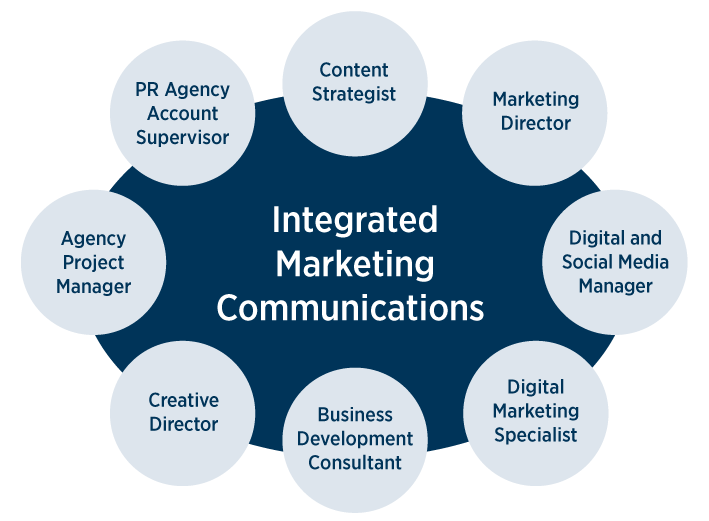
Integrated Marketing Communication (IMC) as defined by The American Marketing Association is ‘a planning process designed to assure that all brand contacts received by a customer or prospect for a product, service, or organisation are relevant to that person and consistent over time’.

The shift from traditional forms of advertising to online advertising has allowed consumers to engage much more with marketing campaigns, and it allows businesses to encourage consumers to feel more a part of the brand. However, it is still essential for a brand to optimise both digital and traditional forms of marketing.

In order for a campaign to be successful, a business must ensure that all their promotional tools, and different types of advertising, are working together in harmony. This is essential what IMC is all about.

It’s suggested that in order to run a successful integrated marketing campaign, a business must follow the following 7 steps:

  1. Have a clear understanding of who your target audience is
  2. Pick your channels
  3. Have a consistent look
  4. Create clear, consistent content that can easily be adapted or repurposed to suit different media or channels
  5. Ensure that your messaging is integrated
  6. Make sure your marketing team/agencies are working in sync
  7. Don’t forget to track your campaigns – and coupons

In 2014, Nivea ran a successful integrated marketing campaign in Brazil.

Nivea utilised their print media advertising by offering a free bracelet, and were able to enable this by having an app which tracked where the child wearing it is. Nivea had a clear understanding of who their target market was, that being young mothers. They choose their channels carefully to this, and placed their advertisements in magazines that are popular with young mothers. Throughout the campaign, Nivea kept their branding very consistent, by using their logo and the same colours.

Although the bracelet does not have much to do with sunscreen, it provided a solution to a problem that many mothers would worry about – losing your child on a busy beach. The key message behind the campaign however, is very linked with Nivea’s sunscreen, in that they both protect children.

What are your thoughts on Integrated Marketing Communications? Can you think any of your favourite advertising campaigns that follow these 7 steps? Let me know in the comments below!

“Liked”

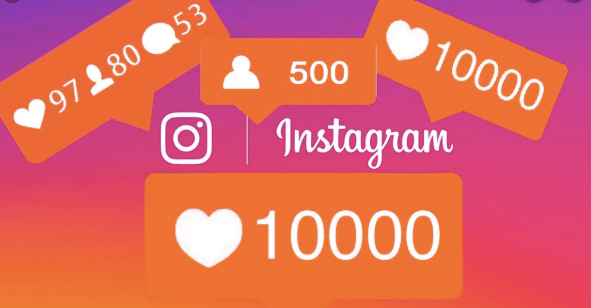
In the middle of July 2019, Instagram removed the option to see likes on photos in a handful of countries, including Australia. The controversial move has been justified by Instagram as they have stated that they hope it will help to improve mental health by “removing the pressure of how many likes a post will receive”.

Studies have found that Instagram has the biggest impact out of all social media outlets on people’s mental health.

Whilst Instagram are claiming that they are doing this for the better good of humanity, many still remain sceptical as to the real reason why Instagram are trialling the removal of likes.

As Instagram is one of the largest social media platforms, it comes across as a bold move to remove one of the most fundamental parts about social media. However, by Instagram removing the option of viewing likes, it does lead us to think, are likes even that important?

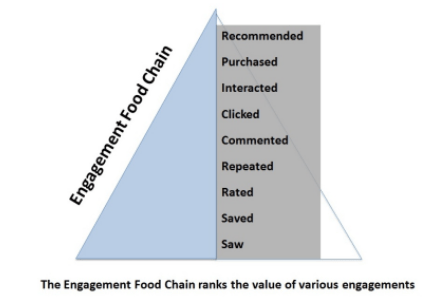
‘The Engagement Food Chain’ (Sterne, J. 2010) shows that having something liked is quite a shallow form of engagement, and may not do much else for the brand other than increase the number of likes. Businesses should be aiming to create content that is highly engaging, and will motivate consumers to not just view their product, but to go out and purchase it.

An opinion article by Dave Levett, states that the only reason why Instagram has removed likes, is to push small businesses into spending more on paid advertising, rather than just relying on organic reach.

An increasing trend particularly with how Google SEO is moving, where businesses have a “silent auction” whenever you search something to appear as the top link. What is popular and what is trending is more and more being manipulated by companies who are willing to pay for it.

Will this trend grow? Where businesses will be pushed into purchasing ads on social media if they want to be viewed? Or is this an over analysis of the situation and are Instagram trying to do what is best for society?

Let me know what you think in the comments below!

Going Viral

There are numerous articles and industry experts including Thota (2018) telling us that social media is more effective when consumers share posts with friends using digital Word of Mouth (WOM) rather than consumers viewing paid advertisements from organisations.

However, the real question is how do we get consumers to engage so much with our posts that they share it with their friends? How do you make a campaign go viral?

Jonah Berger’s 6 STEPPS attempts to provide an answer for this complex issue.

The 6 STEPPS are:

Social Currency

Triggers

Emotion

Public

Practical Value

Stories

I am particularly interested in the idea behind people having an emotional connection to an ad campaign, and from that being driven to share it with their friends. WATERisLIFE ran a successful campaign in 2012 called First World Problems Anthem. Using the hashtag #firstworldproblems the video received over 1 million views in the first day. The ad was very emotive, evoking a sense of guilt from the first world audience of which the video was targeted towards. WATERisLIFE was able to successfully use emotions to make their ad  

However, what if a brand creates an ad campaign, and it goes viral, but, for the wrong reasons?

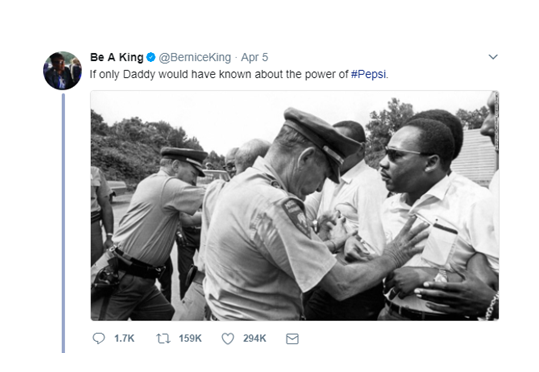
The infamous Pepsi Ad featuring Kendal Jenner is a classic example of an ad going viral for the wrong reason

Pepsi tried to create an ad that used social currency, in that they were showing their consumers that they cared about greater issues in the world. However, it ended up receiving a lot of criticism and creating emotion around it as many viewers were angry at how Pepsi tried to neatly sum up that world peace could be achieved through a can of Pepsi. The ad was cut only a few days after it was realised, however it still gained publicity from major public figures, including Bernice King (the daughter of Martin Luther Kind Jnr)

Trying to make an ad campaign go viral can be very risky and unpredictable. Sometimes being a bit controversial can pay off, but sometimes it can lead to an advertising disaster. Once something is put to the public, there is no guarantee how consumers will respond to it. Once consumers have an emotional response to something, it may be very difficult to change that view as it is very personal and subjective. Should businesses play it safe and post things are difficult to feel emotional towards, but will receive a satisfactory response from the public? Or should businesses take more risks and create ad campaigns that evoke strong emotions from consumers and hope that consumers share it to their friends? Let me know what you think in the comments!

How to best engage consumers on Facebook

This week’s blog post is based upon the Hodis and colleagues (2015) article ‘Interact with me on my terms: a four segment Facebook engagement framework for marketers’

The article discusses in-depth research that attempts to provide an understanding of Facebook users, and how they can be best engaged.

With all the advertising clutter that is now on Facebook, it can make it extremely difficult for a brand to break through and engage with consumers. In attempt to break through this clutter, some brands are making their social media advertisements more personalised to each consumer. However, many consumers are finding this “creepy” and perceive it as a breach of privacy.

In order to help brands understand how to better engage with consumers on Facebook, the article has separated Facebook users into four different segments.

  • Entertainment chasers – who use Facebook in order to cure boredom and stay entertained.
  • Attention seekers – who use Facebook to receive admiration from their friends, as they use the platform to highlight their glamorise life.
  • Devotees – who use Facebook as an escape from real life. Devotees can sometimes be seen as being ‘addicted to Facebook’.
  • Connection seekers – who use Facebook to connect with friends and family, that they may not be able to physically go and visit at that point in time.

When all 4 segments are engaged, it can help to create an online community around the brand. When consumers begin recommending brands to other consumers it can become much more valuable and effective in promoting the brand.

 In Neff, J. (2011) article ‘How Mentos is still making a splash on Facebook’, it’s found that some of the most successful brands on Facebook are those which have most of their posts coming from and being promoted by their fans.

However, whilst it can be very effective to have a brand’s Facebook promotion come from consumers, it may also be very difficult and risky, as you cannot guarantee how consumers will react, or what they will say about it.

When a business constructs all of the Facebook posts themselves, they are in control of it, and can make sure that the post represents exactly how they want to be portrayed.

It is an interesting issue for businesses trying to make their brands more personable in the hope it will engage more people. Do you find you are more engaged when a friend is recommending a brand on Facebook? Or when you see a personalised ad from the brand? Please leave a comment and let me know what you think!

Design a site like this with WordPress.com
Get started